
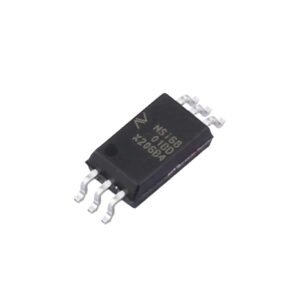
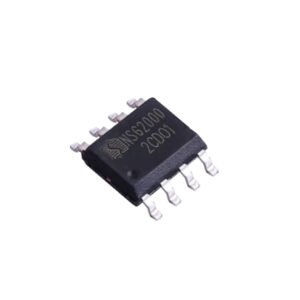


PT6010E Overview
The CR MICRO PT6010E is a dedicated multi-series lithium battery protection IC engineered for high-voltage battery pack systems built from 8 to 10 series cells. It supports all three major lithium chemistries — Li-ion/polymer, lithium iron phosphate (LiFePO4), and lithium titanate (LTO) — making it a versatile single-device solution across a wide range of battery pack designs. Operating across a voltage range of 5V to 60V, the PT6010E protects the pack against the four primary failure modes: overcharge, over-discharge, overcurrent during discharge, and over-temperature during both charge and discharge cycles.
Accuracy is a defining strength of the PT6010E. A ±25mV overcharge detection voltage accuracy ensures the battery is charged safely to full capacity without risk of cell damage from voltage overshoot, while a ±10mV current detection voltage accuracy enables precise and reliable triggering of discharge overcurrent protection. Charging and discharging over-temperature thresholds are independently configurable via external resistors, giving system engineers fine-grained thermal management control without any I²C or SPI interface overhead. The device directly drives external N-type charge and discharge MOSFETs, simplifying gate drive circuit design in high-side and low-side switch topologies. An ultra-low 20µA quiescent current ensures the battery pack consumes negligible standby current during storage, preserving shelf life.
The CR MICRO PT6010E is packaged in a compact LQFP-32L (7×7mm) format, providing sufficient I/O for multi-cell balancing signal routing while remaining manageable for standard SMT assembly processes. Its combination of wide voltage range, multi-chemistry support, and high detection accuracy make it a strong design-in choice for demanding applications where battery reliability and longevity are non-negotiable.
Key Specifications
| Parameter | Value |
|---|---|
| Part Number | PT6010E |
| Manufacturer | CR MICRO |
| Operating Voltage Range | 5V to 60V |
| Supported Cell Series Count | 8 to 10 series |
| Supported Battery Chemistry | Li-ion/polymer, LiFePO4, Lithium Titanate (LTO) |
| Overcharge Detection Voltage Accuracy | ±25mV |
| Discharge Overcurrent Detection Voltage Accuracy | ±10mV |
| Quiescent Current (Iq) | 20µA |
| MOSFET Drive Type | External N-type charge & discharge MOSFETs (direct drive) |
| Over-Temperature Protection | Independently configurable via external resistors (charge & discharge) |
| Protection Functions | Overcharge, over-discharge, overcurrent, over-temperature |
| Package | LQFP-32L (7×7mm) |
| RoHS Compliance | Yes |
Applications
The CR MICRO PT6010E is ideally suited to any high-voltage multi-series lithium battery pack where protection accuracy and multi-chemistry flexibility are required. Core application areas include e-bikes and electric scooters, lithium battery-powered power tools, stationary home energy storage systems, industrial UPS battery modules, and light electric vehicles (LEVs). Its wide 5V–60V operating range and LiFePO4 support also make it a strong fit for solar energy storage packs and marine or off-grid portable power stations where cell chemistry selection varies by application and total pack voltage spans a broad range.
Pin-to-Pin Compatible Alternatives
Specifying the PT6010E as a pin-to-pin compatible replacement allows engineering and procurement teams to reduce BOM cost and broaden supply chain options for high-voltage battery protection circuits without any PCB layout modifications.
| Reference Part Number | Original Manufacturer | Why Choose PT6010E |
|---|---|---|
| BQ76940 | Texas Instruments | CR MICRO PT6010E offers equivalent 8–10S protection at a significantly lower unit cost, with compatible N-MOSFET drive architecture |
| ISL94203 | Renesas (formerly Intersil) | Pin-compatible replacement with broader multi-chemistry support including LTO, reducing SKU count across LiFePO4 and Li-ion product lines |
| S-19900/19901 Series | ABLIC | PT6010E supports a wider 5V–60V operating range, covering higher-series-count packs not addressed by the ABLIC series |
| R5421 Series | Ricoh / IDT | Direct cost-reduction alternative; PT6010E adds independently configurable over-temperature thresholds without additional external ICs |
Frequently Asked Questions
Is PT6010E RoHS compliant?
Yes. The CR MICRO PT6010E is manufactured in full compliance with the RoHS Directive (2011/65/EU), restricting hazardous substances including lead, cadmium, and mercury. RoHS compliance documentation is available upon request through ABL Semi.
What are the pin-to-pin replacements for PT6010E?
The PT6010E is a cost-effective pin-to-pin compatible replacement for established multi-series battery protection ICs including the TI BQ76940, Renesas ISL94203, and ABLIC S-19900 series. Please refer to the compatibility table above for specific substitution advantages.
What is the minimum order quantity (MOQ) for PT6010E?
ABL Semi offers flexible MOQ for PT6010E, supporting both prototype quantities and mass production orders. Contact us for current stock and pricing.
What package options are available for PT6010E?
The CR MICRO PT6010E is available in the LQFP-32L (7×7mm) package, a standard low-profile quad flat pack format compatible with conventional SMT reflow assembly. Contact ABL Semi to confirm current stock availability and lead times.
Can the PT6010E protection thresholds be customised for different lithium cell chemistries?
Yes. The PT6010E supports external resistor configuration for independently setting both the charge over-temperature and discharge over-temperature protection thresholds, allowing the same IC to be tuned for the different thermal characteristics of Li-ion, LiFePO4, and LTO cells. Overcharge detection voltage and overcurrent detection thresholds are similarly designed with high accuracy (±25mV and ±10mV respectively) to accommodate the differing full-charge voltages of each chemistry — 4.2V per cell for Li-ion versus 3.65V per cell for LiFePO4 — without requiring separate protection IC SKUs for each battery type.
For complete product specifications, please refer to: