
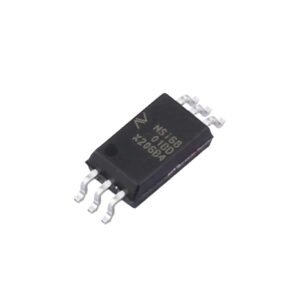
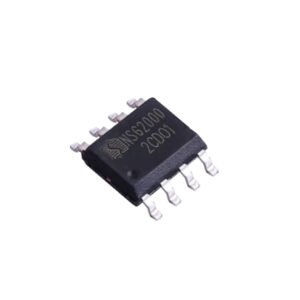


DIO5661 Overview
The DIOO DIO5661 is a 37V high-efficiency boost constant current LED driver IC purpose-built for series LED string and LED matrix backlighting applications requiring precise brightness consistency across all LEDs in the array. Built on a current-mode boost converter architecture achieving up to 86% conversion efficiency, the DIO5661 drives up to 10 white LEDs in series or a 3×13 LED matrix configuration from a single compact IC. The series LED configuration — as opposed to parallel — is a deliberate design choice: series connection ensures that identical current flows through every LED, eliminating the brightness variation caused by forward voltage mismatch that occurs in parallel arrangements. This makes the DIO5661 particularly valuable in display backlight and signage applications where uniform luminance across the entire panel is essential.
DIOO’s DIO5661 operates at a fixed switching frequency of 1.1MHz — high enough to use small-value, low-profile chip inductors and ceramic capacitors, enabling compact PCB layouts suited to slim consumer electronics and automotive interior lighting modules. The peak output current is limited to 1.3A, with high current conversion efficiency maintained at this operating point. A distinctive feature of the DIO5661 is its PWM-to-constant-current (PWM-to-CC) dimming mode, which accepts an external PWM signal with frequencies ranging from 200Hz to 200kHz (10kHz and above recommended for flicker-free performance) — converting the PWM duty cycle input into a proportional constant current output, delivering smooth and linear brightness control without the LED colour temperature shift associated with pure current-reduction dimming methods. An integrated low-side power MOSFET eliminates an external switching transistor, directly minimising component count and PCB area.
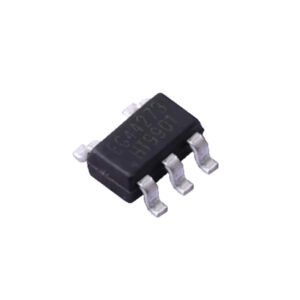
The DIO5661 includes a comprehensive protection suite: LED open-circuit protection prevents high-voltage output runaway when the LED string is disconnected; thermal shutdown protection prevents device damage under sustained overtemperature conditions; and cycle-by-cycle input current limiting caps peak inductor current on every switching cycle to protect against short-circuit and overload. A built-in soft-start circuit limits inrush current during startup, protecting both the DIO5661 and connected LEDs from stress during power-on. Available in SOT-23-6 and ultra-compact DFN-6 (2×2mm) packages, the DIO5661 suits both standard SMD and space-critical high-density PCB designs. ABL Semi stocks the DIO5661 as a fully authentic, original DIOO factory product with flexible MOQ and compliance documentation for UK and European customers.
Key Specifications
| Parameter | Value |
|---|---|
| Device Type | Step-Up (Boost) Constant Current LED Driver |
| Maximum Output Voltage | 37V |
| Maximum LED String Length | Up to 10 white LEDs in series |
| LED Matrix Support | 3×13 LED matrix (3 LEDs per row) |
| Conversion Efficiency | Up to 86% |
| Switching Frequency | 1.1MHz (fixed) |
| Maximum Output Current Limit | 1.3A |
| Dimming Mode | PWM-to-Constant Current (PWM-to-CC) |
| Dimming Frequency Range | 200Hz to 200kHz (≥10kHz recommended) |
| Integrated Power MOSFET | Yes — low-side (minimises external components) |
| Soft Start | Built-in (limits inrush current at startup) |
| Protection Features | LED open-circuit, thermal shutdown, cycle-by-cycle current limiting |
| Package Options | SOT-23-6, DFN-6 (2mm × 2mm) |
Applications
The DIO5661 is designed for series LED string and matrix backlight driving applications where uniform brightness, high switching efficiency, and compact PCB footprint are required. Primary application areas include smartphone and tablet display backlights, notebook LCD backlight modules, automotive cluster and infotainment display backlights, portable navigation device displays, and LED indicator panel arrays. The device is equally applicable in industrial HMI display backlights, wearable device screen modules, and point-of-sale terminal display lighting, where its 37V output capability, PWM-to-CC dimming, and 1.1MHz high-frequency switching enable compact, energy-efficient constant current LED drive with excellent brightness uniformity across the full LED array.
Pin-to-Pin Compatible Alternatives
The DIO5661’s SOT-23-6 and DFN-6 (2×2mm) packages and boost constant current LED driver architecture are footprint-compatible with several established Western LED driver ICs, enabling direct substitution to reduce BOM cost and diversify supply chain without PCB layout changes.
| Reference Part Number | Original Manufacturer | Why Choose DIO5661 |
|---|---|---|
| LM3410XMFX | Texas Instruments | 1.6MHz boost LED driver in SOT-23-5/6; DIO5661 provides a comparable 1.1MHz high-efficiency alternative with integrated PWM-to-CC dimming mode and support for up to 10 series LEDs at a more competitive unit cost |
| MAX8833ETA+ | Analog Devices (Maxim) | Boost white LED driver in SOT-23-6 for series LED strings; DIO5661 offers equivalent series configuration drive with 37V output, 86% efficiency, and PWM-to-constant-current dimming from ABL Semi stock |
| AAT1401IGU-6-T1 | Advanced Analogic Technologies | Boost LED driver in SOT-23-6; DIO5661 supports a larger 10-LED series string and integrated low-side MOSFET to reduce external component count while maintaining comparable package footprint |
| NCP5030MUT2G | onsemi | Boost LED driver in small SMD package; DIO5661 provides PWM-to-CC dimming flexibility across a wide 200Hz–200kHz range and LED open-circuit protection not available in the NCP5030 |
| TPS61160DRVT | Texas Instruments | Boost LED driver in 6-pin SON (2×2mm); DIO5661 provides a pin-compatible DFN-6 (2×2mm) alternative with equivalent 37V boost capability and comparable dimming control at a lower unit cost |
Frequently Asked Questions
Is DIO5661 RoHS compliant?
Yes. The DIO5661 is fully RoHS compliant. DIOO manufactures the DIO5661 in accordance with EU RoHS Directive 2011/65/EU, ensuring the device is free from restricted hazardous substances including lead and mercury. ABL Semi can provide full compliance and trade documentation upon request to support UK and European regulatory and procurement requirements.
What are the pin-to-pin replacements for DIO5661?
The DIO5661 is a footprint-compatible alternative to several established SOT-23-6 and DFN-6 boost LED driver ICs, including the TI LM3410XMFX and TPS61160DRVT, Maxim MAX8833ETA, Advanced Analogic AAT1401, and onsemi NCP5030 — all sharing compatible small-outline packages and boost constant current LED driver topology. Refer to the compatibility table above for a detailed comparison.
What is the minimum order quantity (MOQ) for DIO5661?
ABL Semi offers flexible MOQ for DIO5661, supporting both prototype quantities and mass production orders. Contact us for current stock and pricing.
What package options are available for DIO5661?
The DIO5661 is available in two package options: SOT-23-6 (6-pin small outline transistor, standard SMD format) and DFN-6 (2mm × 2mm) (ultra-compact 6-pin dual flat no-lead package for high-density PCB designs). The DFN-6 variant is preferred in slim portable electronics where board space is critical, while the SOT-23-6 suits standard SMD assembly processes with conventional pick-and-place and reflow. Both packages share equivalent electrical performance. Contact ABL Semi to confirm current stock availability for your preferred package.
What is the difference between PWM dimming and the DIO5661’s PWM-to-constant-current dimming mode?
Standard PWM dimming switches the LED string fully on and off at the PWM frequency, with average brightness controlled by the duty cycle. While effective, very low PWM frequencies (below ~1kHz) can cause visible flicker, and very high duty cycle ratios at the LED driver level can stress the power switch. The DIO5661’s PWM-to-constant-current (PWM-to-CC) dimming mode is different: the external PWM signal is fed into the EN/DIM pin, and the device internally converts the PWM duty cycle into a proportional constant current level — the LED current is continuously regulated at a value corresponding to the duty cycle, rather than switching the LEDs fully on and off. This approach delivers smooth, linear brightness control without LED flicker concerns at lower frequencies and avoids the inrush current stress of repeated full on/off switching — making it particularly well-suited to display backlight applications where uniform, flicker-free dimming is a product quality requirement.
For complete product specifications, please refer to: